The short answer
There is no single best type of wood for everyone. The best type of wood for outdoor furniture depends on how the furniture will be used, how much maintenance you are willing to accept, the climate it will be in, and the aesthetic you desire. Teak is often the safest choice for longevity and low susceptibility to moisture, acacia is often a good middle-ground option, white oak can be a strong choice with the right construction, and pine is best when budget, painting, or surface treatment is an important part of the solution.
What determines if a wood type works outdoors?
When choosing wood for outdoor furniture, it's easy to get caught up in appearances. But the most important factor is often how the wood behaves over time. Wood used outdoors is exposed to moisture, sun, temperature fluctuations, and dirt. How well it performs therefore depends on both the wood's natural durability and how the furniture is constructed, surface-treated, and placed. Even very good types of wood will fare worse if water is left standing or if the furniture is constantly damp.
It is therefore wise to assess wood types based on five factors:
- natural resistance to rot and moisture
- how much maintenance is required
- how easily the wood moves or cracks outdoors
- price level
- the look you want over time
Teak – best for those who prioritize durability and less hassle
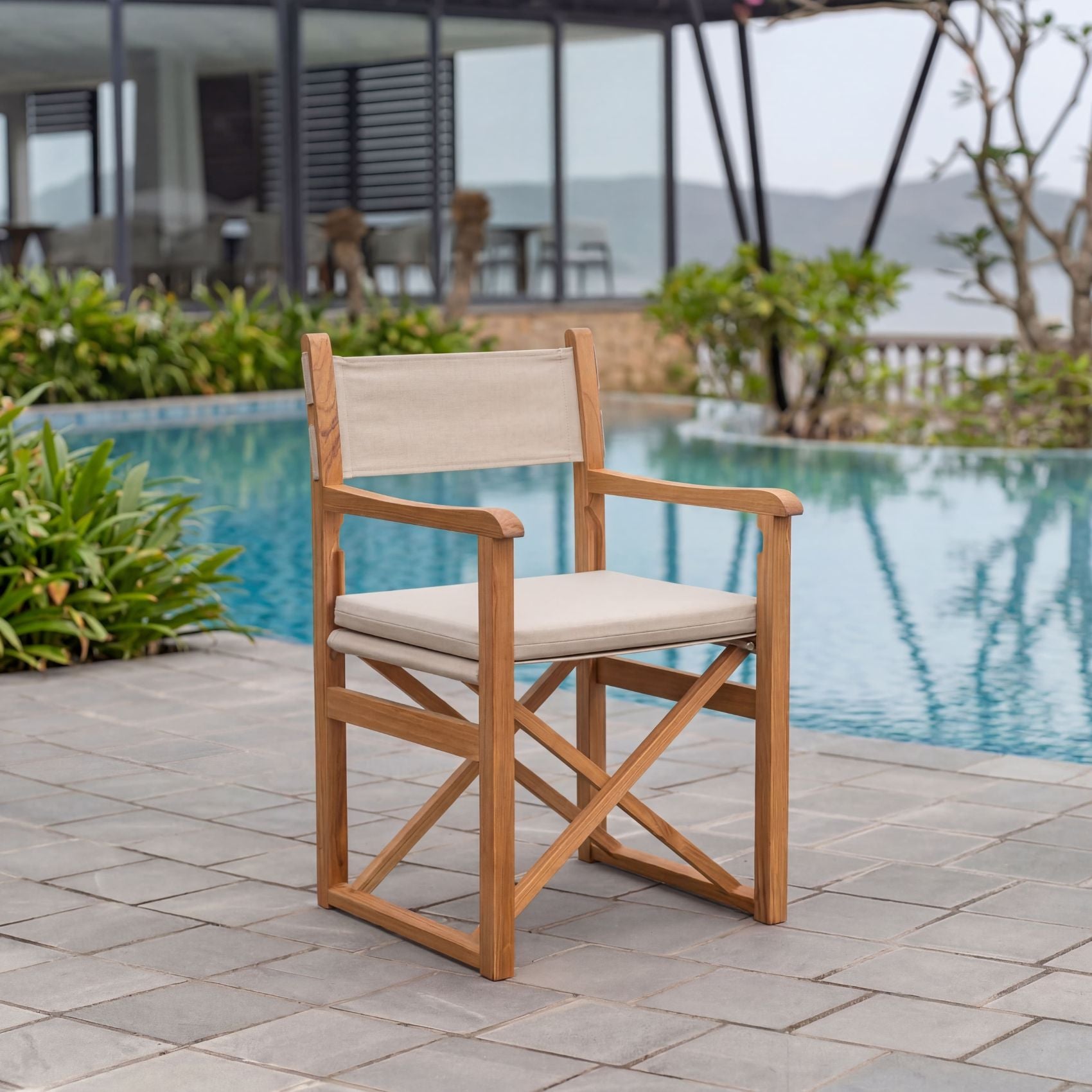
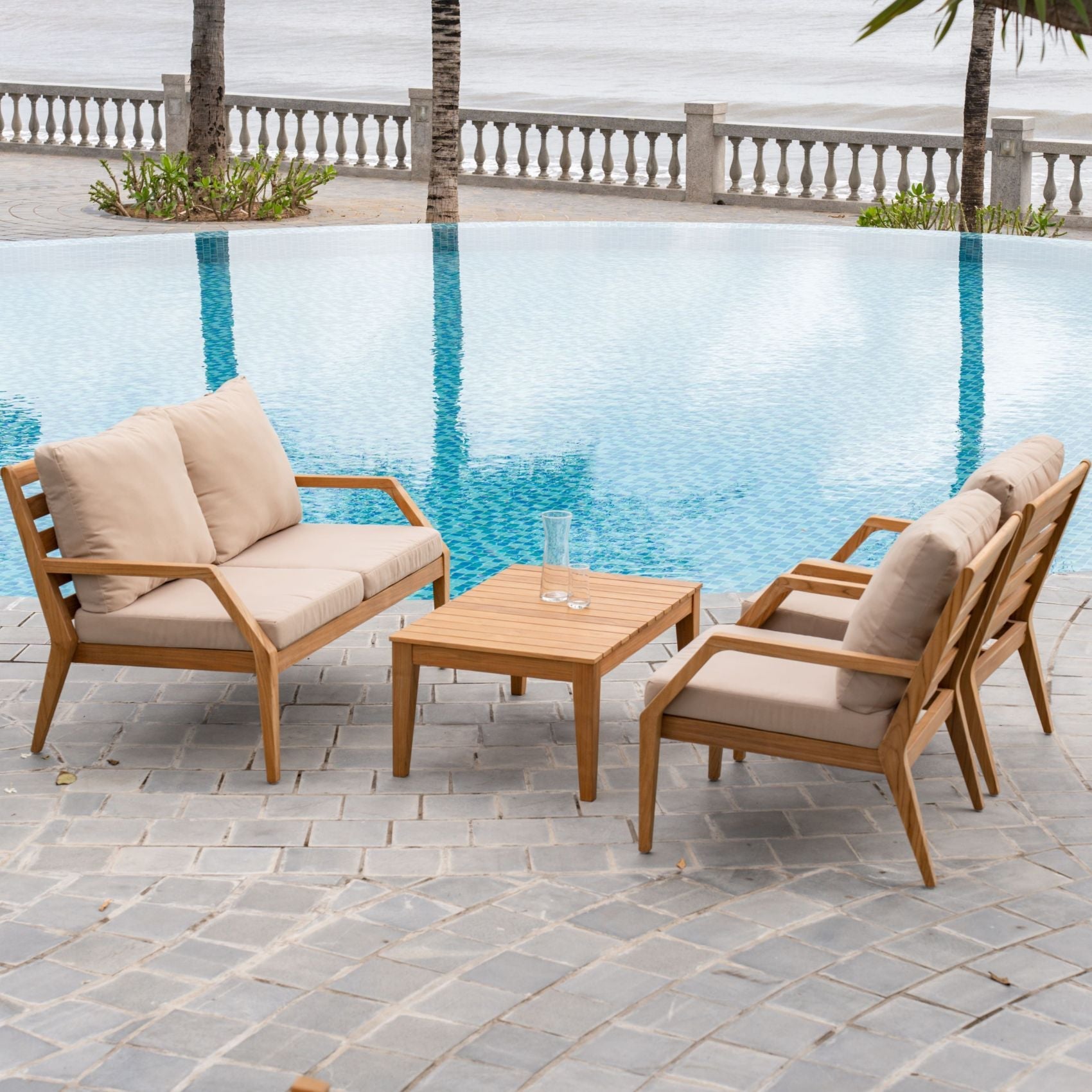
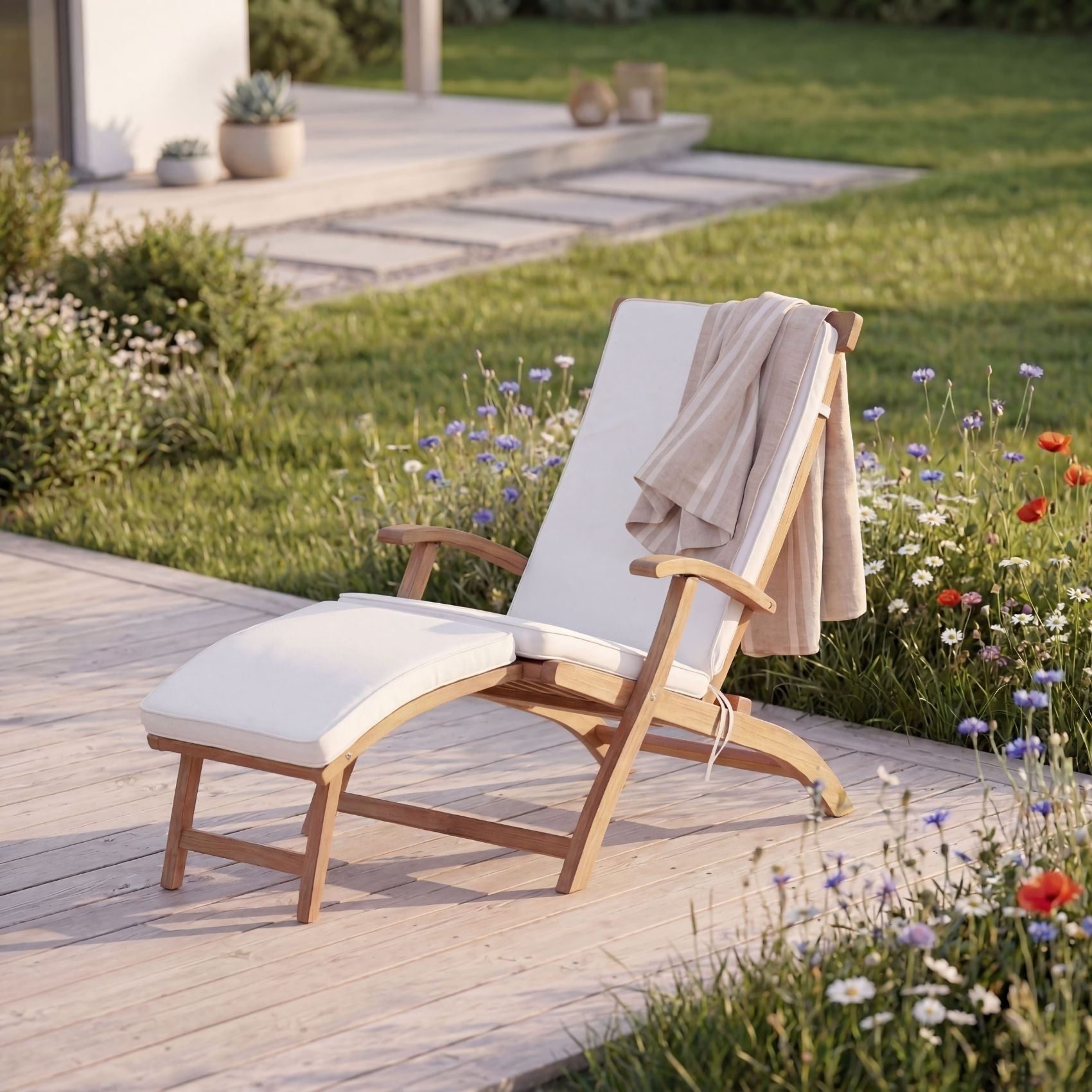
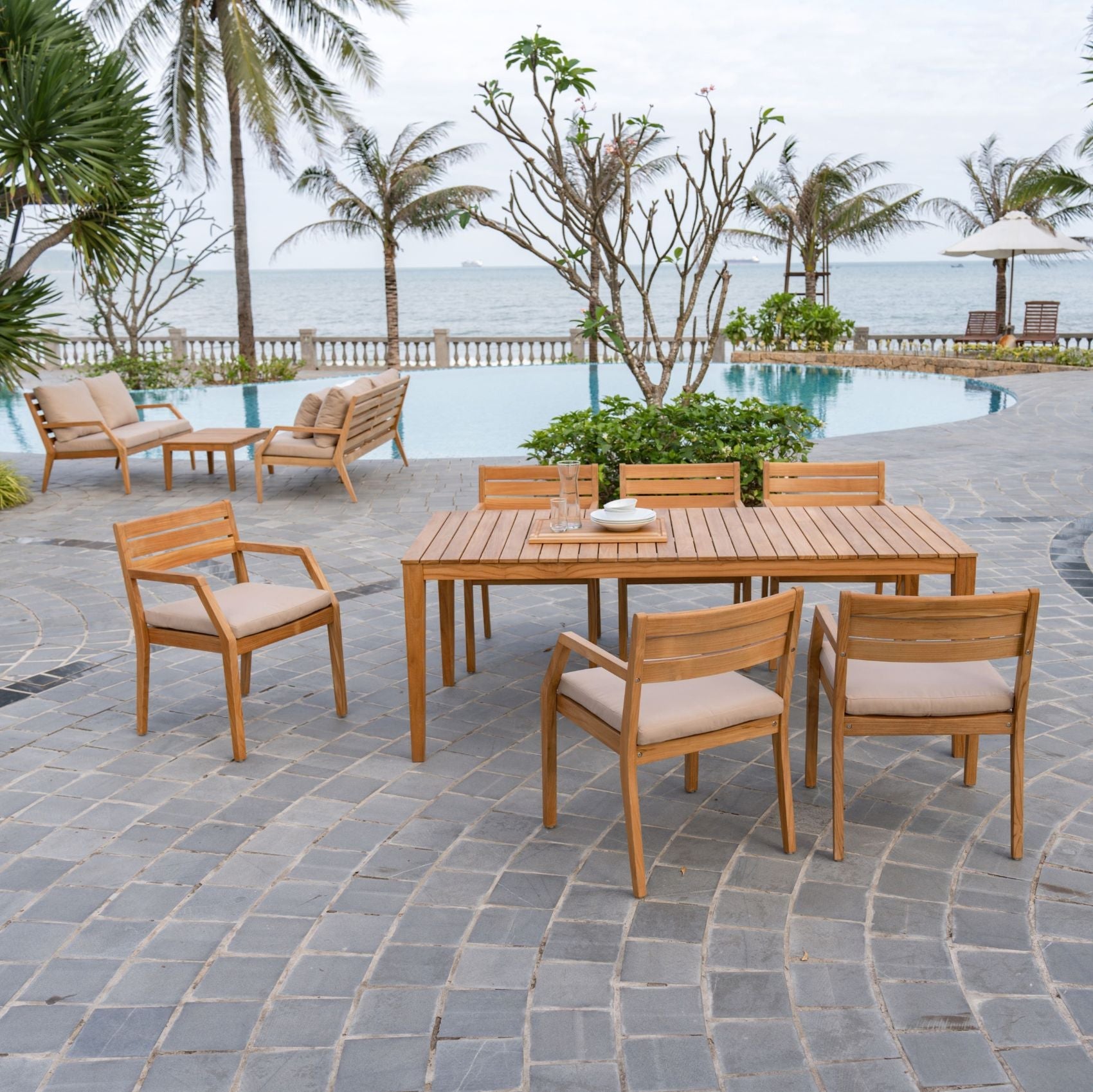
Teak has long had a strong reputation for outdoor use, and for good reason. Teak's heartwood is considered very durable against rot and is well-known for its good weather resistance. This is an important reason why teak is often used for boats, outdoor furniture, and other environments where the wood is exposed to moisture and weather for long periods.
Teak is particularly suitable if you want:
- long lifespan
- low stress regarding maintenance
- a wood type that performs well even in more exposed locations
- furniture that can age gracefully to a silver-grey patina
The main drawback is the price. Teak is often more expensive than both pine and acacia, making it not always the best choice for all budgets. Furthermore, the quality can vary between different teak products depending on the wood's origin, proportion of heartwood, and how the furniture is constructed.
Best suited for: those who want to buy less frequently, maintain less, and have furniture that can handle a more exposed outdoor life.
Acacia – good balance between price, hardness, and appearance
Acacia is popular for outdoor furniture because it often looks exclusive but costs less than teak. At the same time, it's important to understand that "acacia" is not a single type of wood but a large group with many species. This means that the properties can vary quite a bit between different products.
Many acacia furniture pieces work well outdoors, especially in protected or semi-protected locations. However, since the variation within acacia is large, one should be a little cautious with general promises. In practice, this means that the quality of manufacturing, surface treatment, and storage often becomes extra important when choosing acacia.
Acacia is often a good fit if you want:
- a hard wood with a distinct grain
- a warmer, more furnished feel
- a better premium feel than many cheaper alternatives
- a lower price than teak
The drawback is that acacia, in many cases, is more dependent on care and placement than teak. In an unprotected, wet location year-round, the difference often becomes more apparent.
Best suited for: those who want a lot of wood character for their money and are willing to do a bit more maintenance or place the furniture in a more sheltered spot.
Oak – strong choice, but consider the type of oak
Oak has a high status in furniture and carpentry, but outdoors it's important to distinguish between white oak and red oak. White oak is significantly more rot-resistant and is used in contexts where higher durability is needed. Red oak, on the other hand, is much less suitable for outdoor use. Therefore, "oak" itself is too vague as a purchase signal if one doesn't know which type it is.
White oak can be a very good choice if you like:
- classic feel
- weight and stability
- a wood type that ages with character
- robust furniture design
At the same time, oak is often heavier and may require more thought regarding surface treatment, construction, and drying than many consumers realize. It is therefore a strong material, but not automatically an easy-care outdoor choice just because it feels solid.
Best suited for: those who know it is white oak, appreciate a classic wood feel, and accept that construction and maintenance play a significant role.
Pine – smart when price, painting, or simplicity is most important
Pine is common in outdoor furniture because it is easy to work with, lighter in weight, and often significantly cheaper than harder woods. However, pine generally has lower natural resistance to rot than, for example, teak and white oak. Therefore, pine works best when it is properly treated and when you accept that maintenance is a larger part of ownership.
Pine is often a good fit if you want:
- a more budget-friendly option
- furniture that will be painted or stained
- lighter furniture that is easier to move
- a solution where you accept more ongoing maintenance
If you choose pine, protection, surface treatment, and construction become even more important. Pine can work well, but it is less forgiving if the furniture is left wet or has poor ventilation.
Best suited for: those who prioritize price, like painted furniture, or are happy to do their own maintenance.

Comparison: pine, oak, acacia, and teak
Teak
Strengths: very high natural durability, low sensitivity, long lifespan, attractive patina.
Weaknesses: higher price.
Acacia
Strengths: good price-appearance balance, hard wood, beautiful grain.
Weaknesses: varies between species and products, often more dependent on care and protection than teak.
White oak
Strengths: strong, classic, better rot resistance than many believe.
Weaknesses: must be the right type of oak, heavy, requires thoughtful construction and maintenance.
Pine
Strengths: affordable, easy to work with, good for painted furniture.
Weaknesses: lower natural durability, more dependent on treatment and care.
How to choose the right wood type based on where you live
If the furniture will be completely exposed to rain and changing weather, teak is usually the safest choice. If it is under a roof or in a more sheltered location, acacia or white oak can be very reasonable alternatives. If you prioritize price and don't mind painting or regular maintenance, pine is often the most logical choice.
The most important thing is not just the type of wood itself, but the combination of:
- wood type
- construction
- surface treatment
- storage
- how exposed the location is to moisture
Our assessment
If the question is which type of wood performs best outdoors over time, with the least hassle, teak is often the strongest overall solution. If the question, however, is about the best balance between price and premium feel, acacia often becomes interesting. If you want traditional weight and character, white oak can be the right choice. And if you are looking for the most economical option, pine is often reasonable, especially in painted or treated furniture.
The most expert answer is therefore not "there is a single best type of wood," but:
the best type of wood for outdoor furniture is the one that best suits your environment, your budget, and your maintenance level.
Frequently asked questions
Which type of wood lasts longest outdoors?
Teak is among the wood types most often highlighted as the most durable for outdoor use due to its very good natural resistance. But white oak can also work well in the right context, while pine normally requires more protection and treatment.
Is acacia good for outdoor furniture?
Yes, often, but the quality varies as acacia comprises many species. Therefore, construction, surface treatment, and placement are extra important when assessing acacia furniture.
Is oak good for outdoor furniture?
White oak can be a good choice outdoors. Red oak, however, is significantly less suitable for outdoor use. If a product is simply called "oak" without clarification, it is reasonable to ask what type of oak it actually is.
Is pine a bad choice for outdoor furniture?
No, but it is usually not the easiest choice to maintain. Pine can work well if it is properly treated and if you are prepared for more maintenance than with teak.
What matters most: wood type or maintenance?
Both play a significant role. A good type of wood provides better conditions, but maintenance, ventilation, construction, and placement often determine how well the furniture actually performs outdoors.