

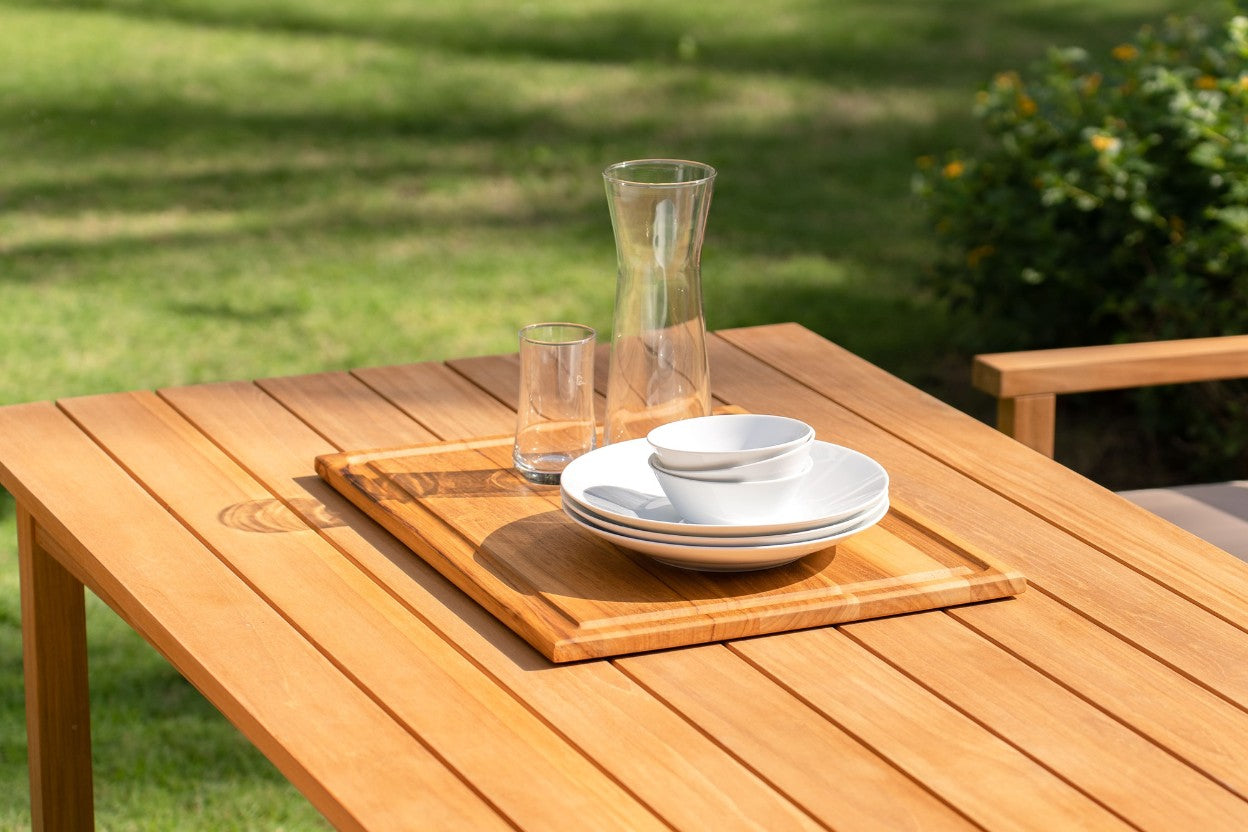
Short answer: do not treat teak before you know if the surface is untreated or previously treated, what you want to achieve, and what instructions apply to the product. The surface must be clean and completely dry. Always test on a less visible spot.
This guide is about preparation and choice of surface treatment. For general cleaning, go to the main guide on teak care. For the decision on oiling, read To oil teak or not?.
Before treating your teak furniture
- Identify the surface: untreated, oiled, or treated with another product.
- Determine the goal: cleaning, more even appearance, or warmer color.
- Assess the condition: check for moisture, dirt, growth, stains, and damage.
- Check the instructions: only use a product that is intended for the furniture and the usage environment.
- Test: try on a small, hidden area before treating the entire piece of furniture.
Untreated or previously treated teak?
Untreated teak
Untreated teak can be left to develop a silvery-grey patina. If you want to apply a treatment, the surface must first be clean and dry, and the product's instructions must be followed.
Previously oiled teak
Find out which product has been used. Do not automatically apply a new product on top of an unknown treatment, as compatibility and results may vary.
Unknown surface treatment
If the history is unknown, it is safer to ask for advice and show pictures of the surface than to guess. Contact Stockamöllan with the product name if available.
If you are considering teak oil
Teak does not have to be oiled. Oiling is mainly chosen to give a warmer tone and involves more ongoing maintenance. Application, wiping, and drying time vary between products, so always follow the manufacturer's instructions.
Rags with oil can pose a fire risk. Handle and dispose of them exactly according to the safety instructions on the product.
Common mistakes
- Treating a damp or dirty surface.
- Using a product without checking previous treatment.
- Skipping testing on a hidden surface.
- Assuming a fixed interval instead of assessing the surface's condition.
- Mixing products without explicit information about compatibility.
- Disregarding safety instructions for oil and rags.
When should you refrain and ask first?
Ask before treatment if the surface is blotchy, sticky, damaged, or has heavy growth, if the wood's previous treatment is unknown, or if the furniture combines wood with materials that can be affected by the product.
The material in Stockamöllan's furniture
All teak used by Stockamöllan is FSC-certified. Models may have different teak quality, construction, fittings, and textiles. Therefore, follow the specific product information instead of assuming that all furniture should be treated identically.
Common questions about treating teak
Does new teak need to be treated immediately?
No, not as a general rule. First, decide if you want the furniture to develop a natural patina or influence the color with a treatment.
Can you apply new oil on top of old?
Not without assessing the existing surface and product compatibility. Follow the instructions for the product to be used.
How often should teak be treated?
There is no single interval that suits all furniture. Placement, use, weather, previous treatment, and the product's instructions govern this.
Does the surface need to be dry?
Yes, before surface treatment, you must follow the product's requirements for a clean and dry surface, as well as the specified drying time.